Narrow Plot House
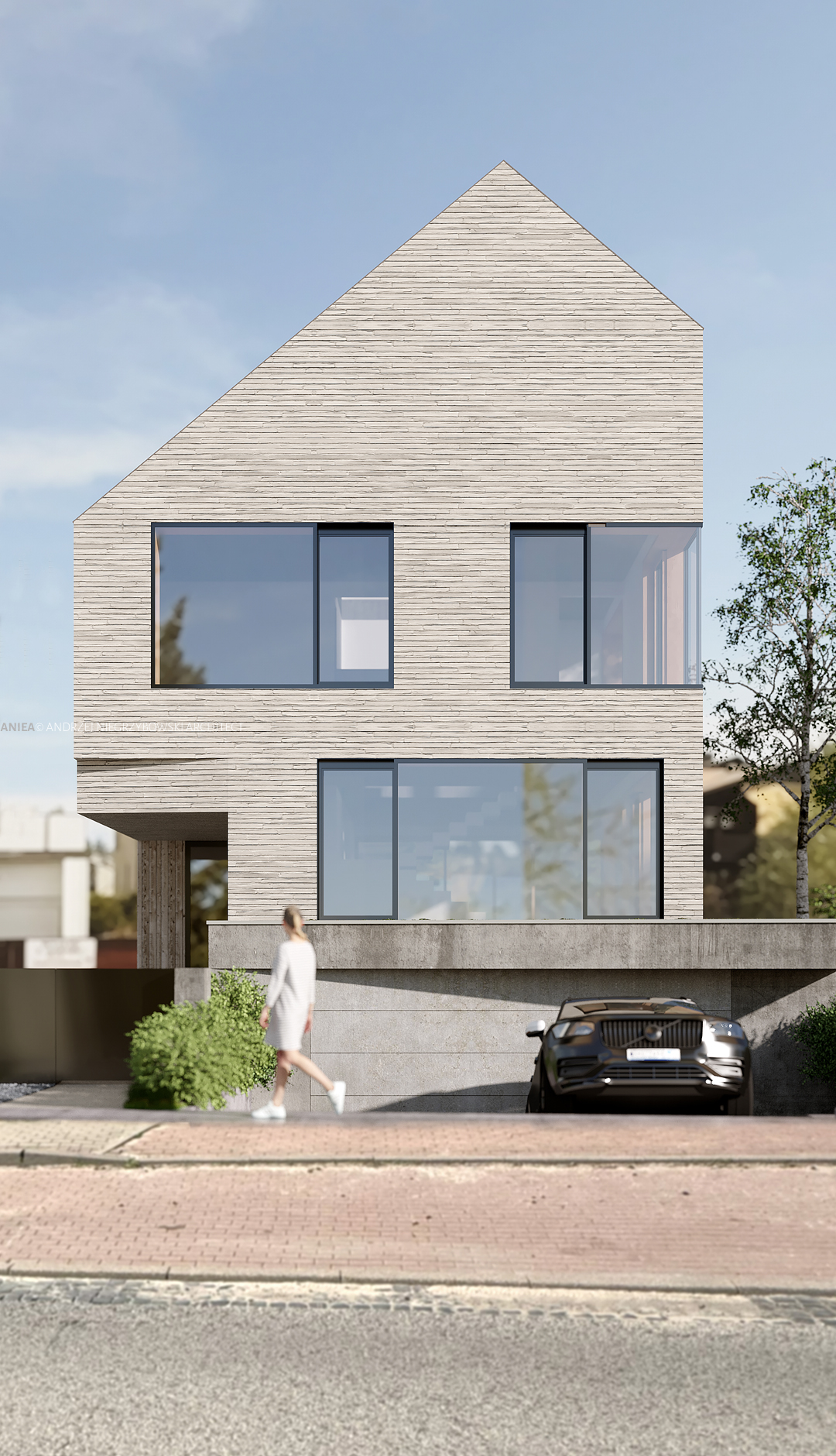
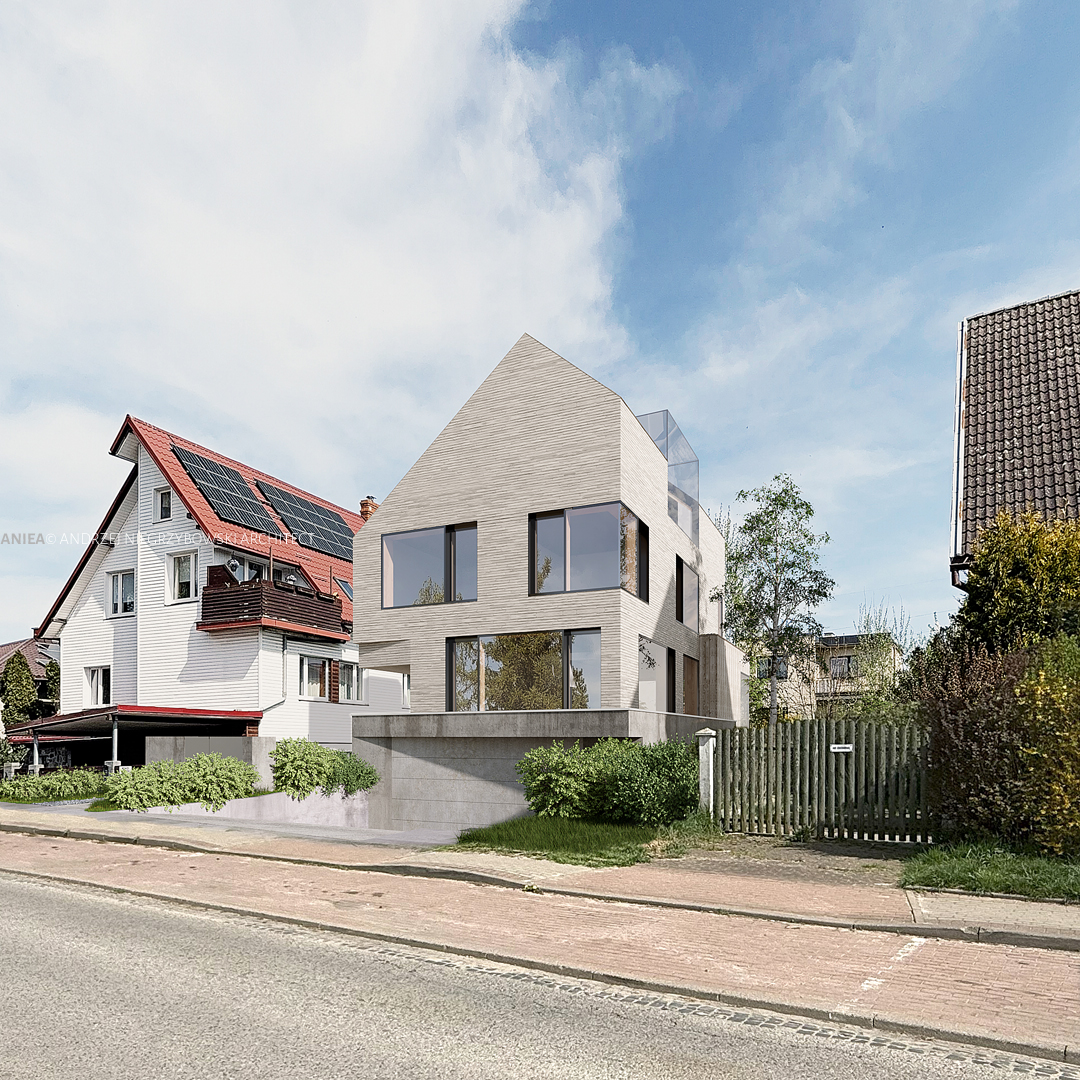
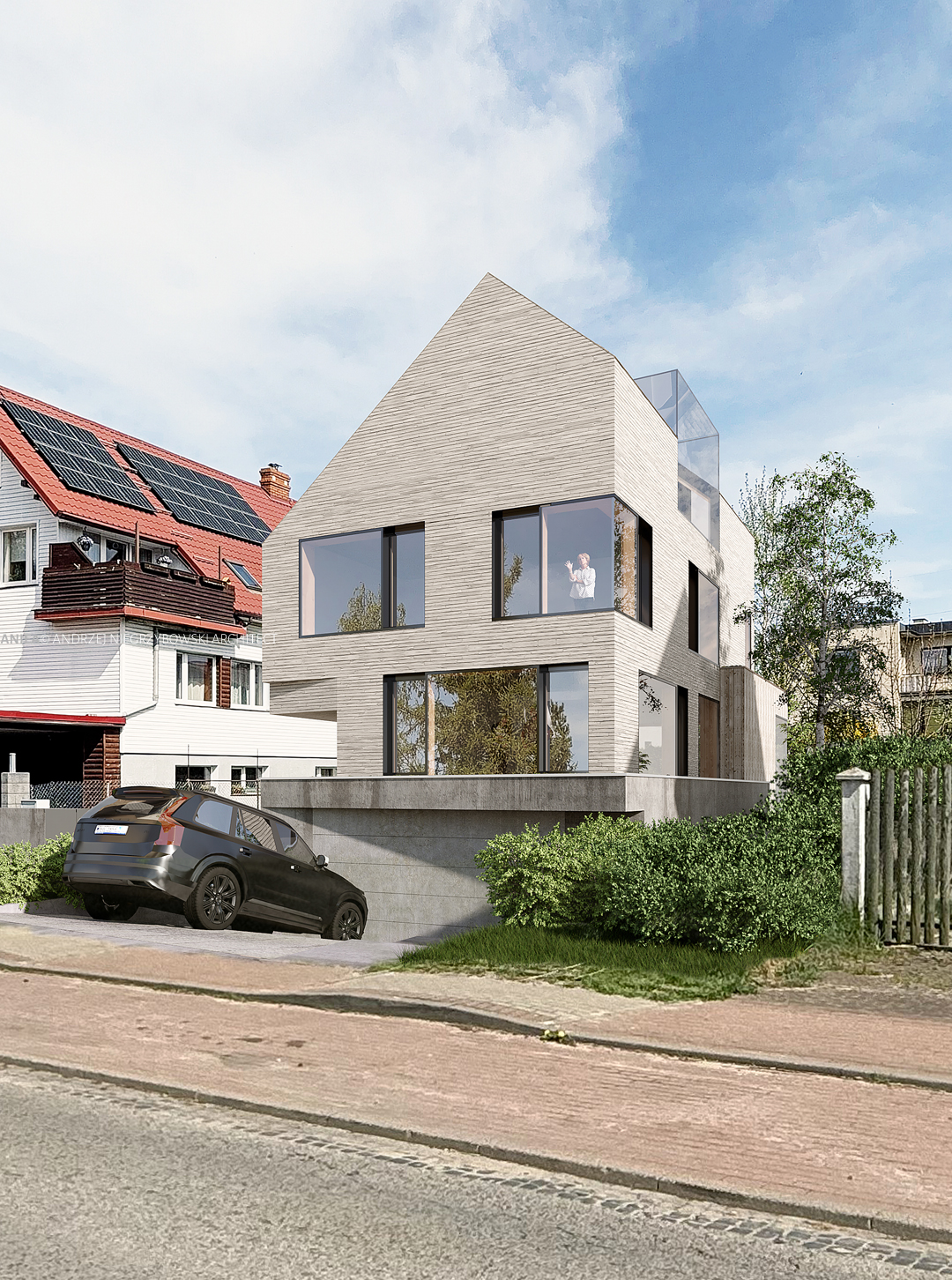
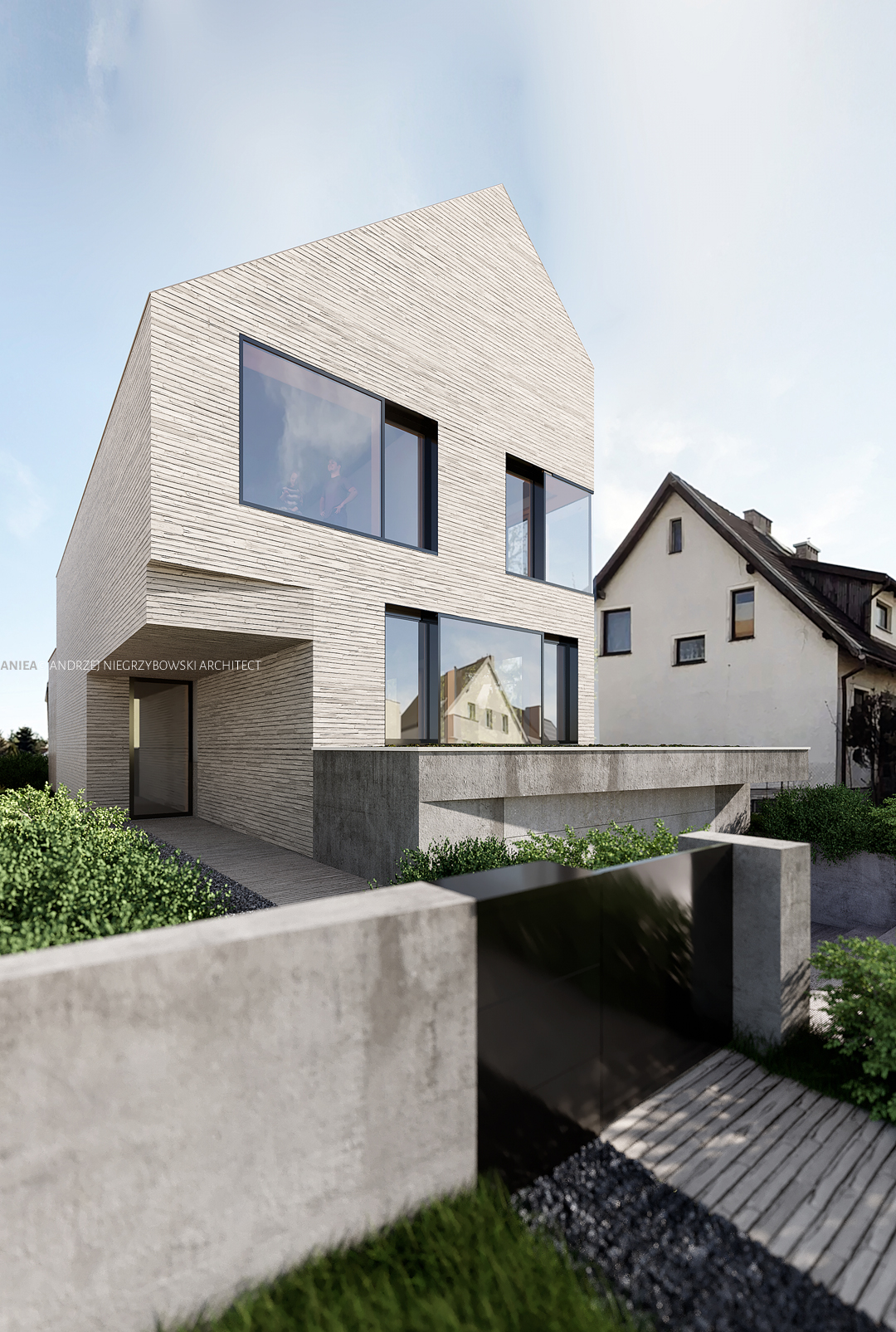
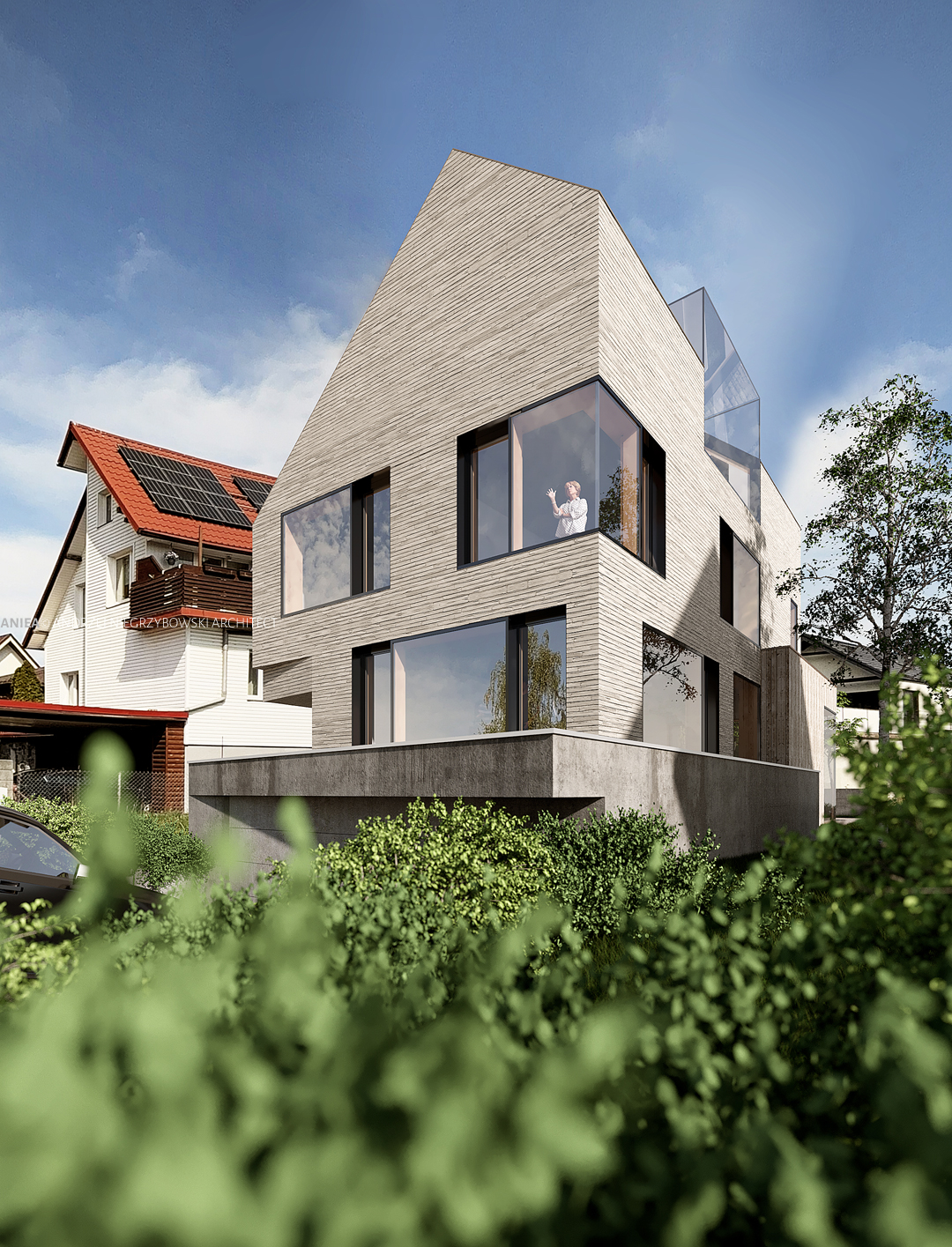
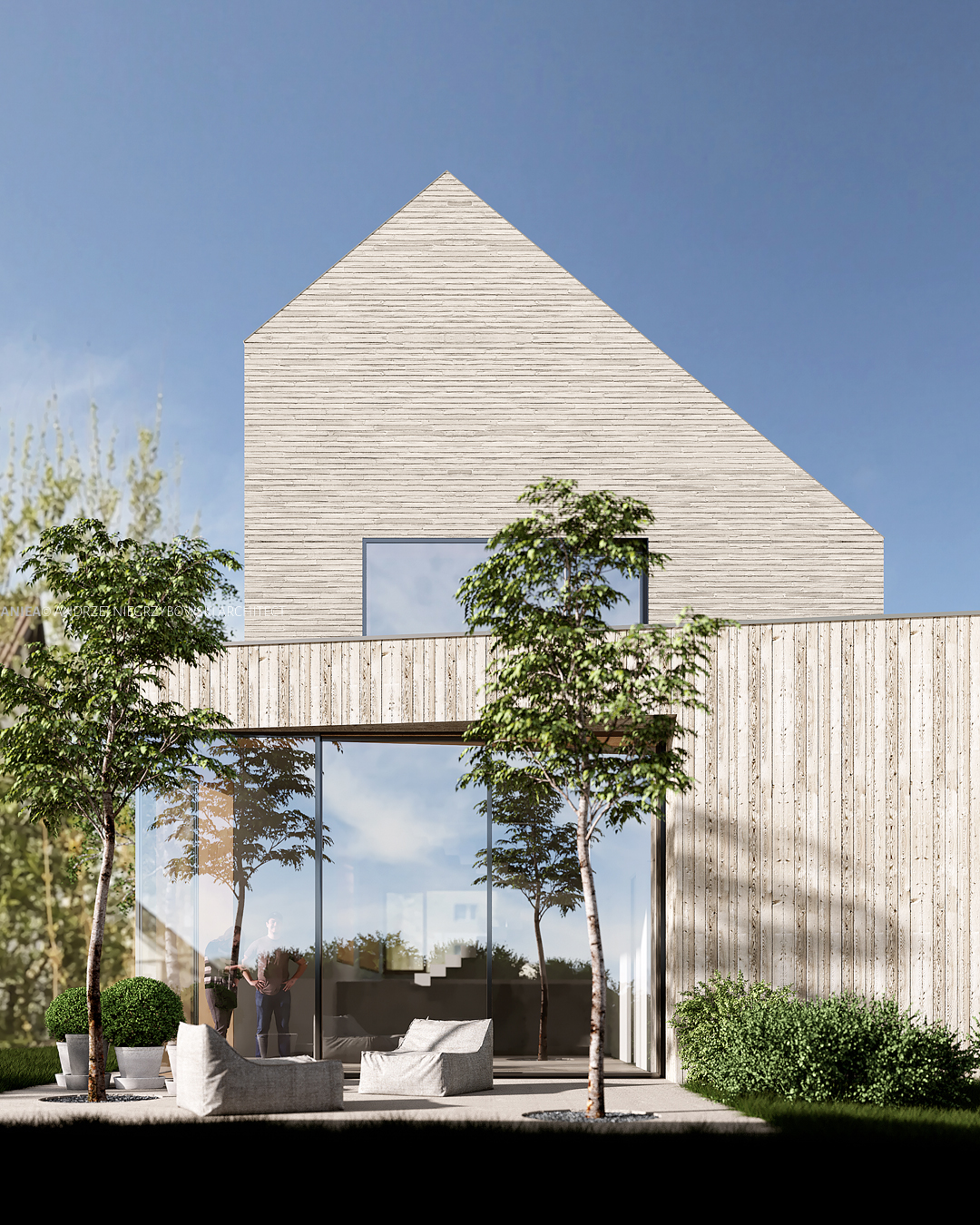
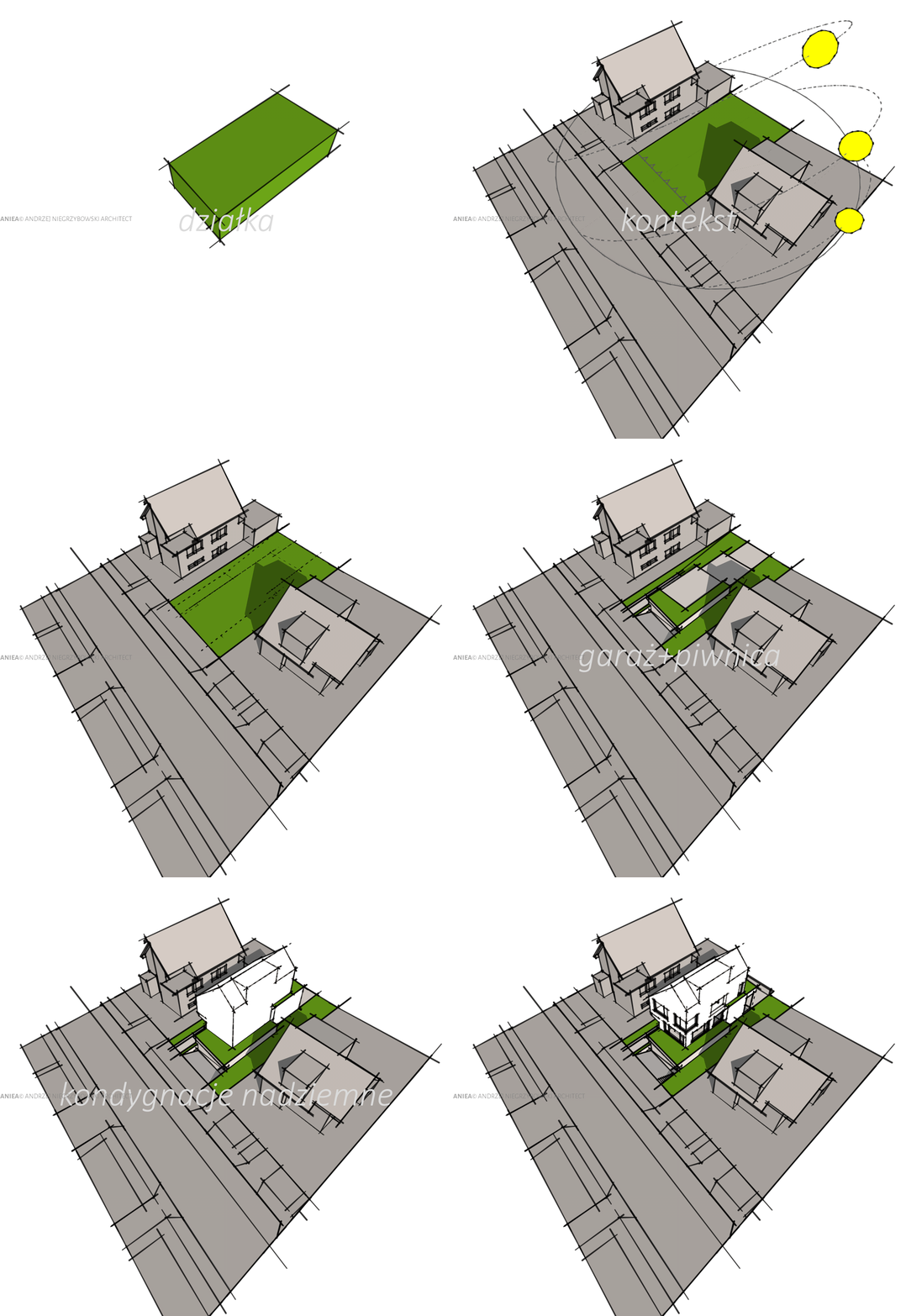
Taking into account the context and the provisions of the local zoning plan, the designed volume was enclosed within three interpenetrating blocks of varied coloration, resulting from the characteristics of the façade materials. The interplay of forms is intended to emphasize the functions housed within, as well as to properly articulate the composition and visually reduce the scale of the house, which is located on a relatively tight plot. Above this composition of blocks rises and dominates the archetypal form of a modern barn, with its symmetrical gabled roof, which accommodates the attic, the upper floor, and part of the ground floor.
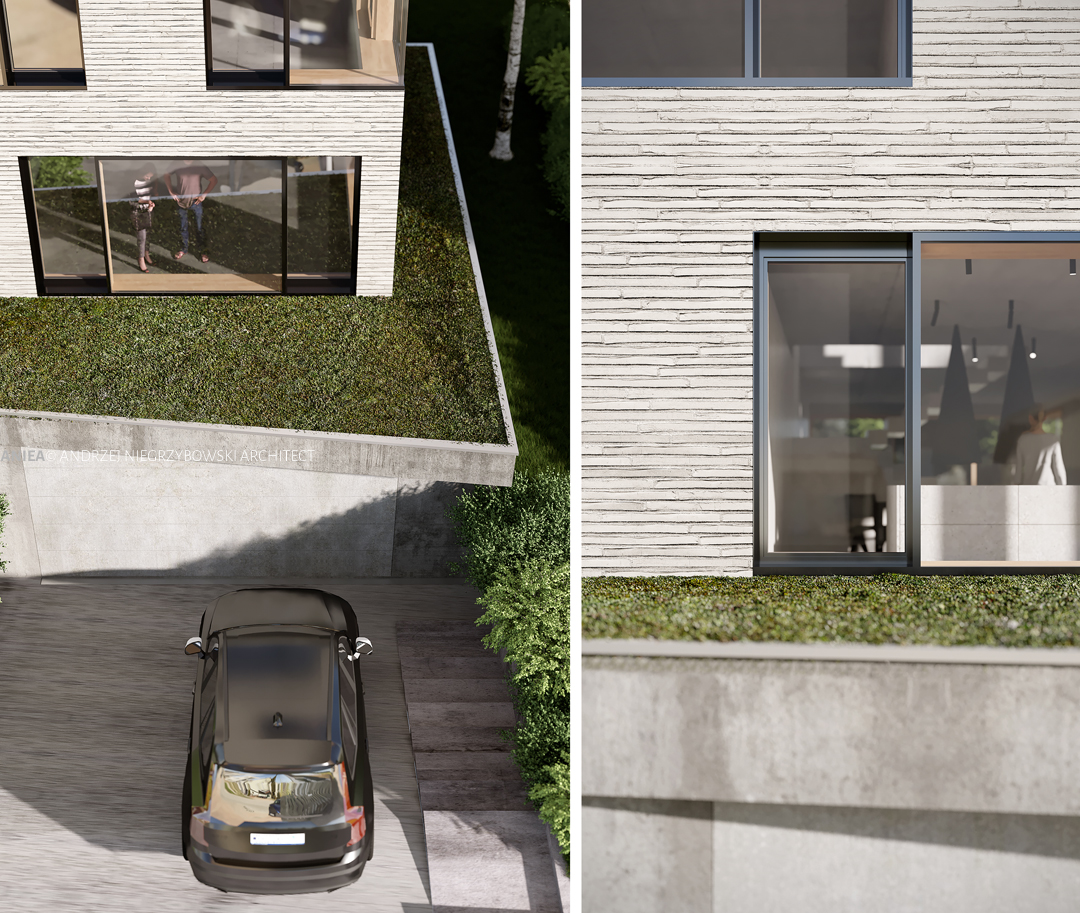
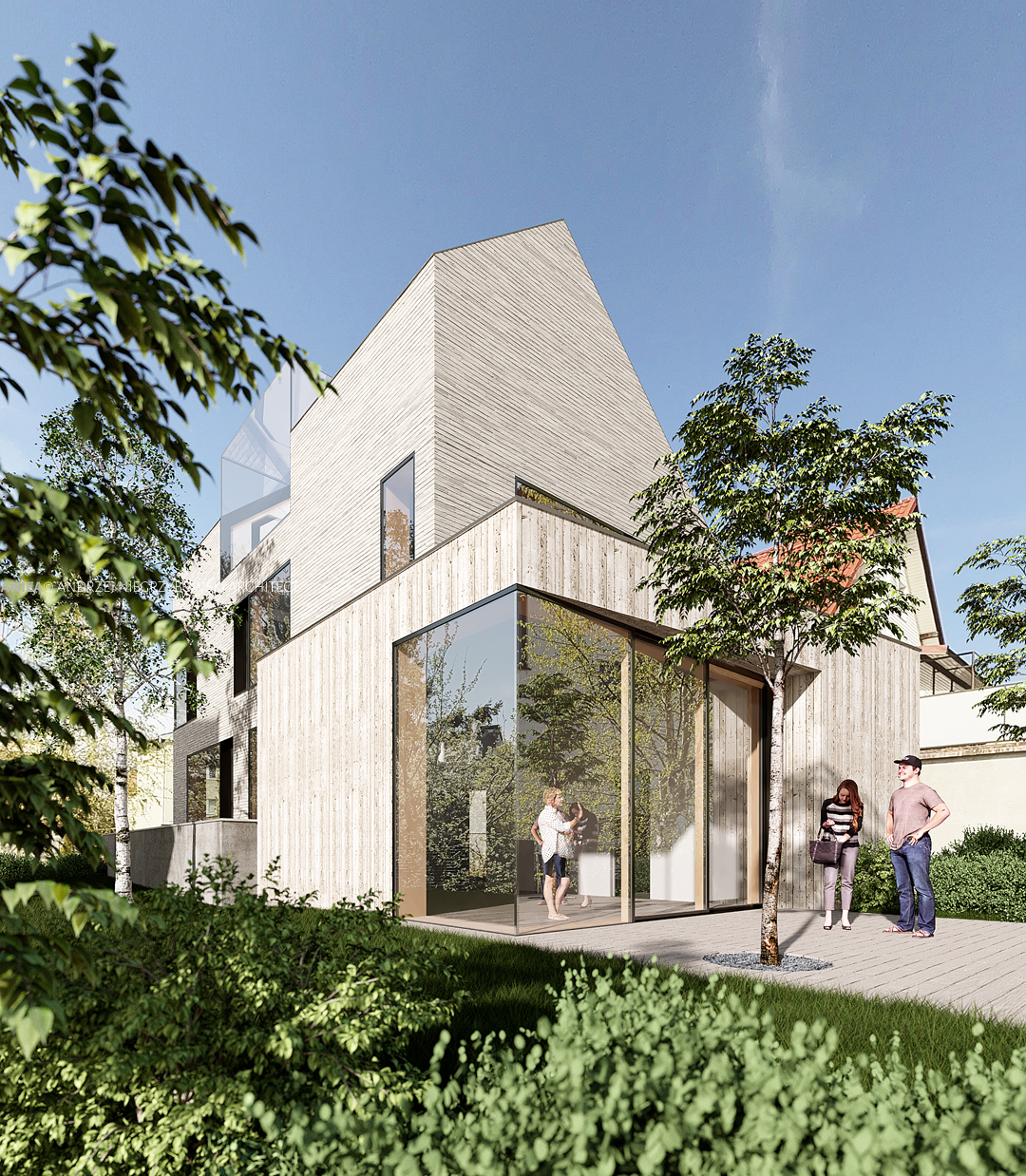
To add dynamism on the one hand, and on the other to prevent shading the windows of the neighboring building, the ridge axis was shifted so that it does not run through the center of the plan. When viewed from the street, this offset may evoke associations with the stepped gable walls of adjacent houses. Part of the ground floor, with its projecting cuboid form, conceals the living room and its adjoining functions. From the front, i.e. from the west, a basement slightly raised above ground level features a chamfered cut and an overhang that refers to the building line and to the edges of the sidewalk and roadway, which do not run perpendicular to the roof ridge. This chamfer also appears at the overhang of the entrance recess on the north-west side, as well as in the overhang of the living room volume projecting into the garden on the eastern side.
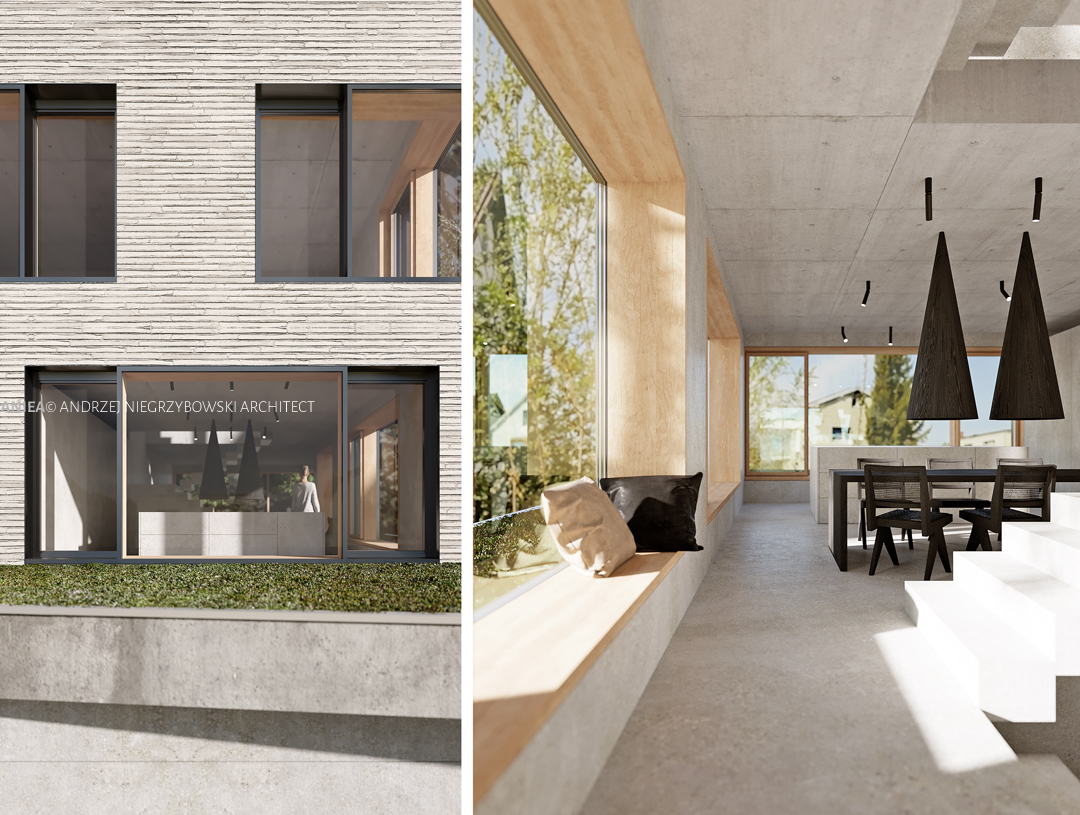
The color composition of the house consists of two dominant colors and an additional complementary one. All derive directly from the characteristics of the materials used: the gray of architectural concrete, the sandy, slightly gray tone of ceramic tiles in an elongated brick format, and the graphite color of the window and door joinery. To unify the appearance of the archetype, the roof was also covered with tiles similar in form to brick and in a color consistent with the façade.
The elevation layout, seemingly chaotic at first glance, is in fact organized into modules with intersecting axes, consistently continued across all façades. These lines transition into the edges of recesses or overhangs, accentuating, for example, the main entrance to the house on the north-east side, as well as the large glazing with direct access to the living room from the garden on the eastern side.
Design: 2025
Status: under construction
Total area: approx. 346 m² (of which usable area: approx. 201 m²)
Location: Gdynia, Poland
Author: Andrzej Niegrzybowski