
Reconstruction of an Old Farmstead – Kashubian Minimalism
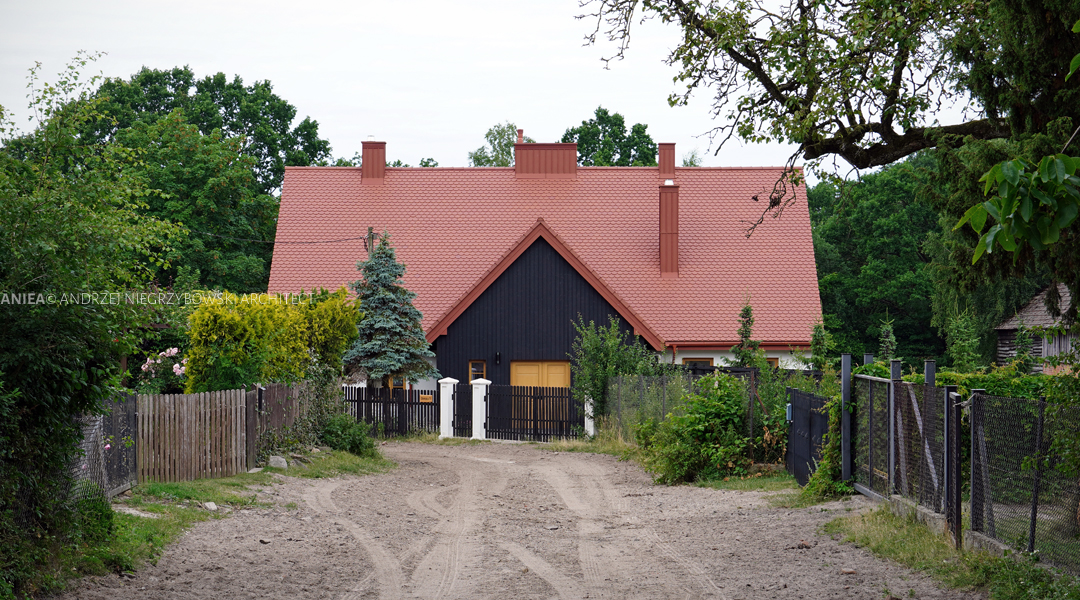
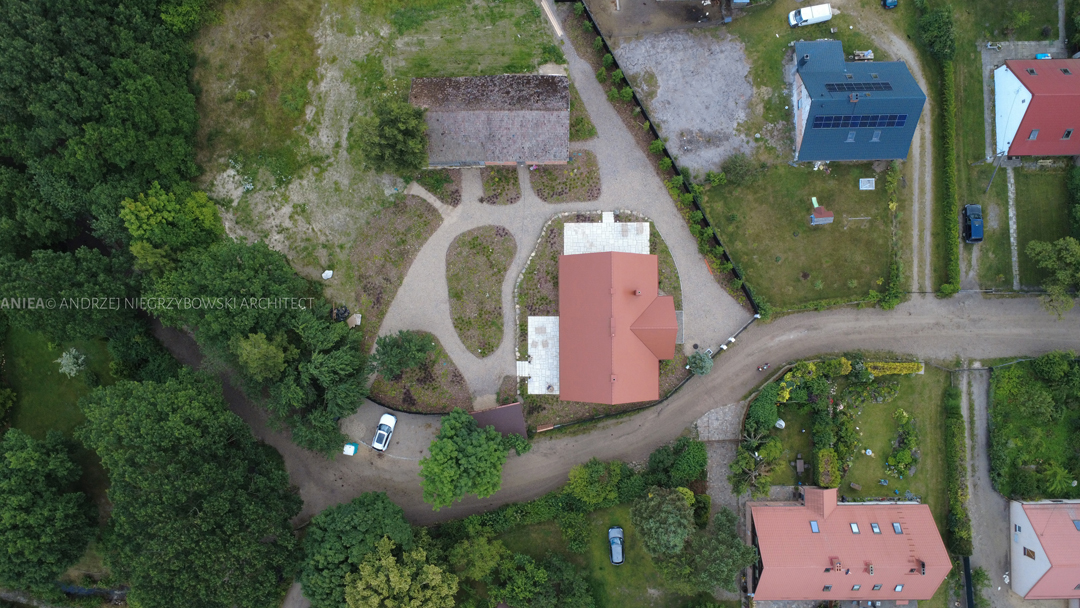
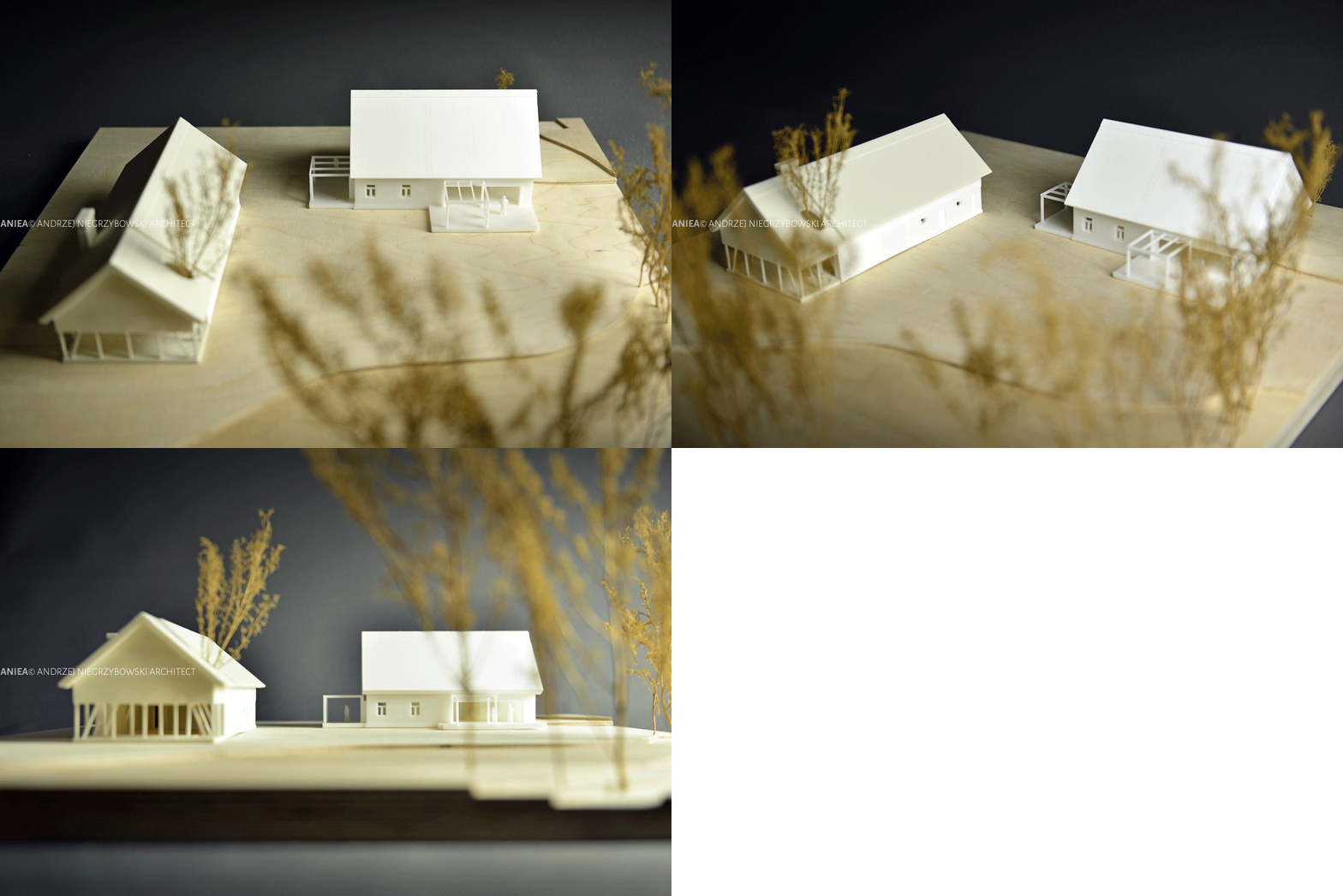
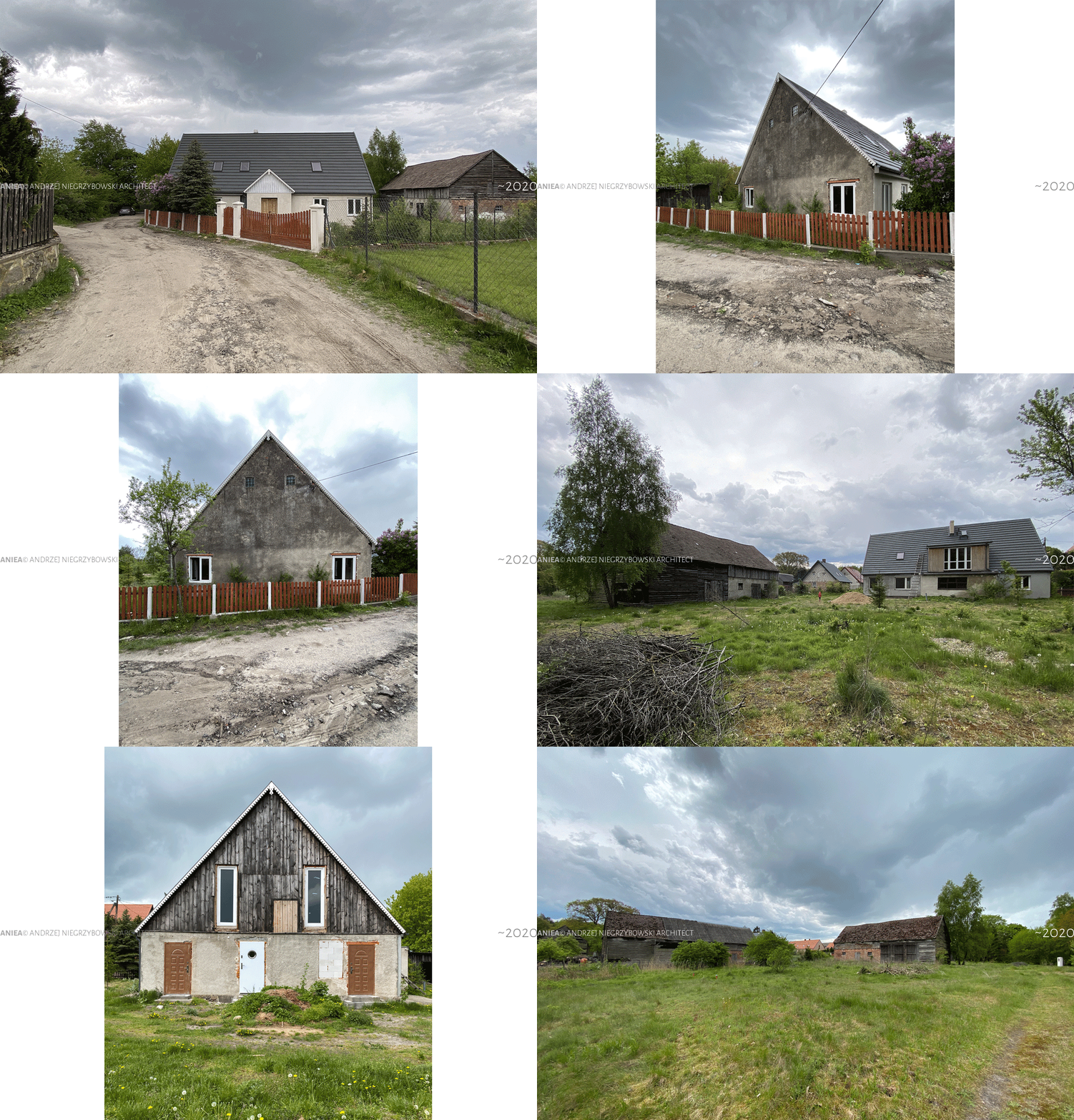
The project involves the reconstruction and expansion of two buildings of a former rural farmstead, located in the central part of a small Kashubian village, in close proximity to the Baltic Sea. The concept includes the adaptation of a century-old house and its adjacent barn into year-round holiday accommodations.
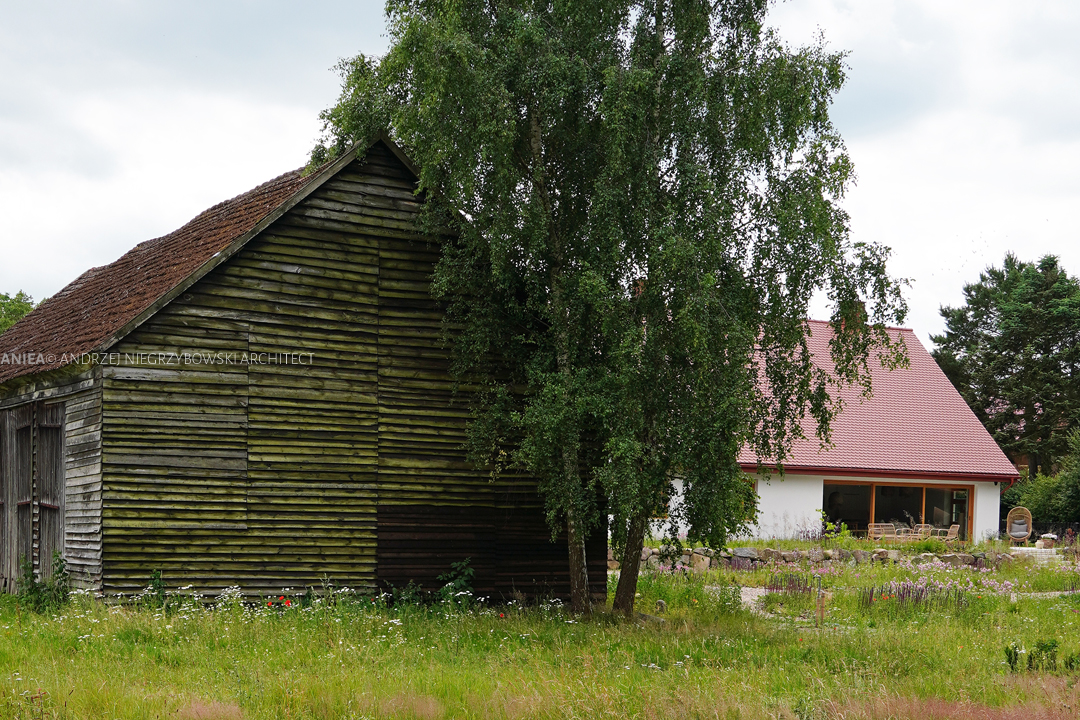
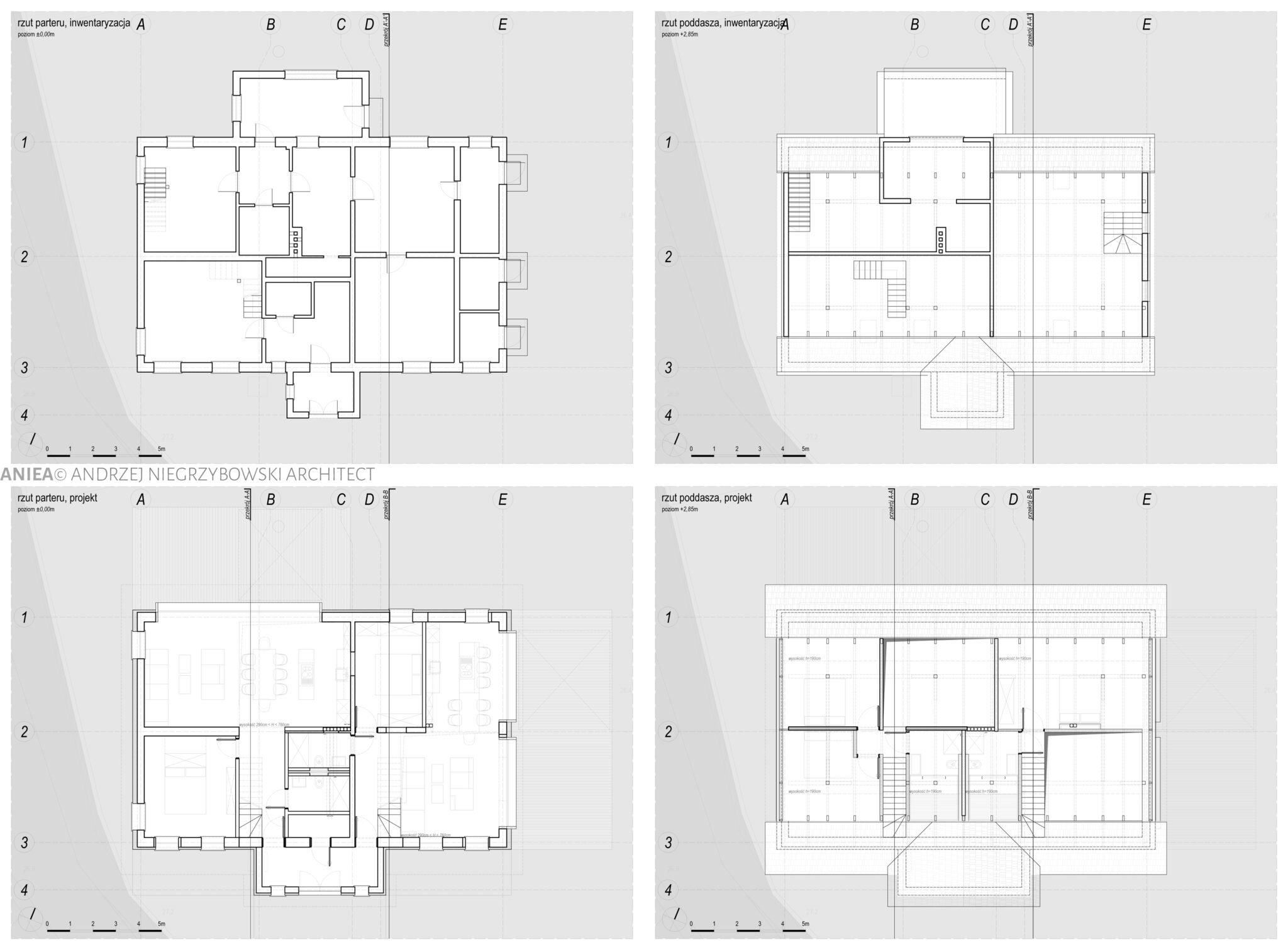
The house has been converted into two independent holiday apartments, while the barn — in the next phase of implementation — will become a spacious holiday home. The main design principle was based on respect for the local cultural context, the historic character of the built environment, and the preservation of the original farmstead layout.
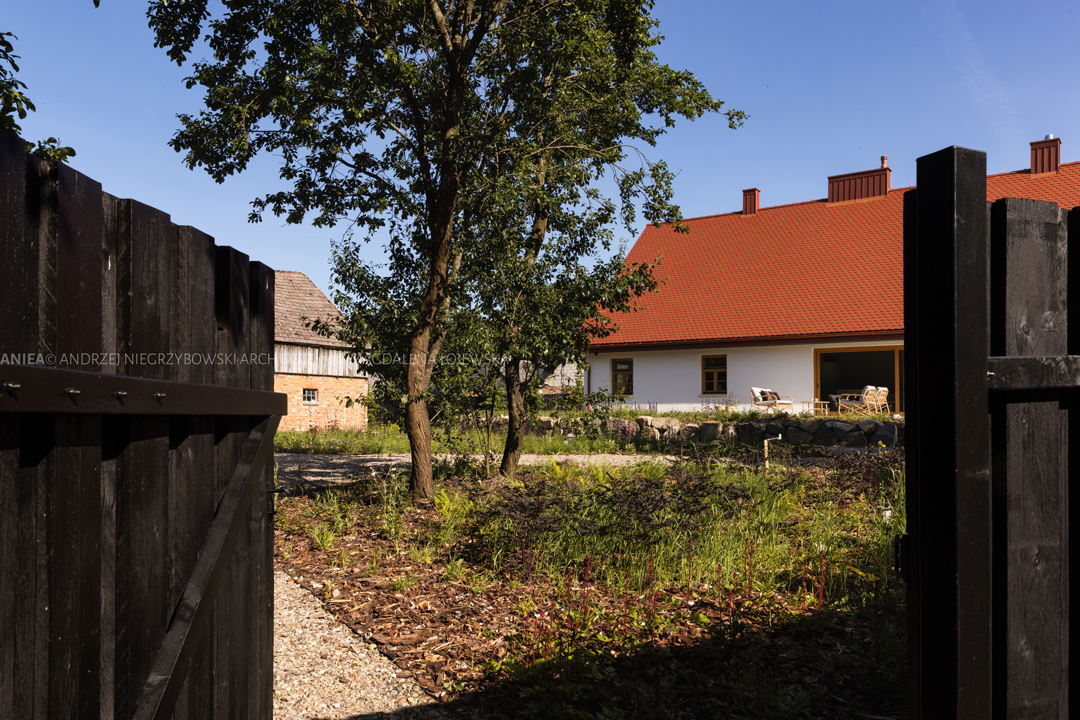
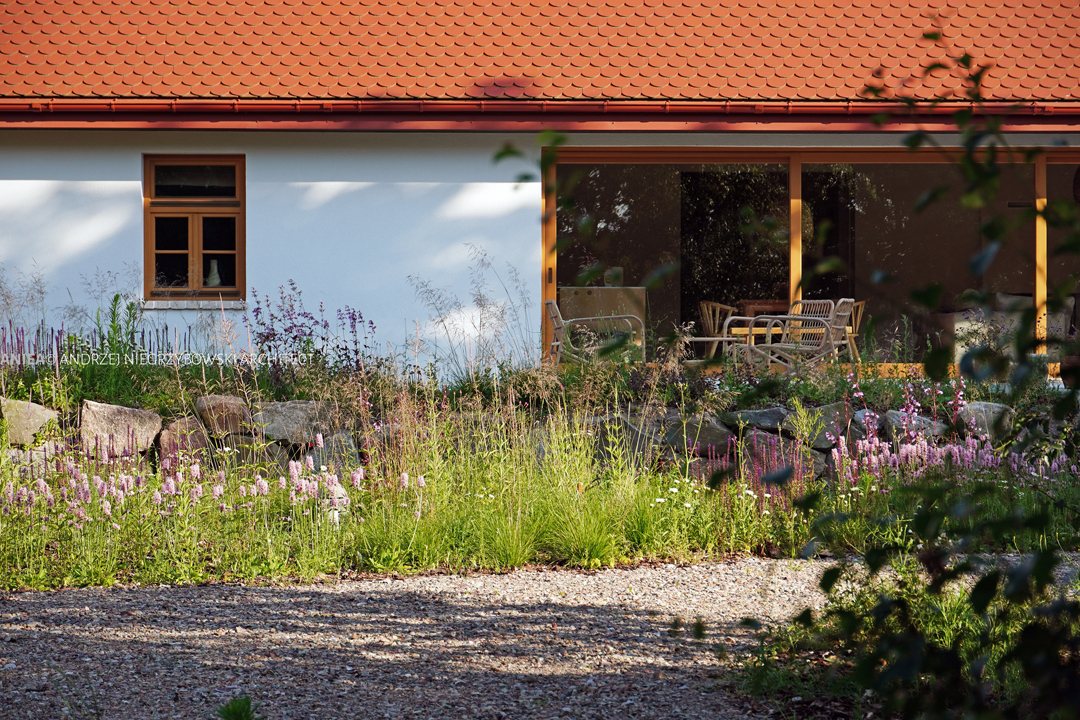
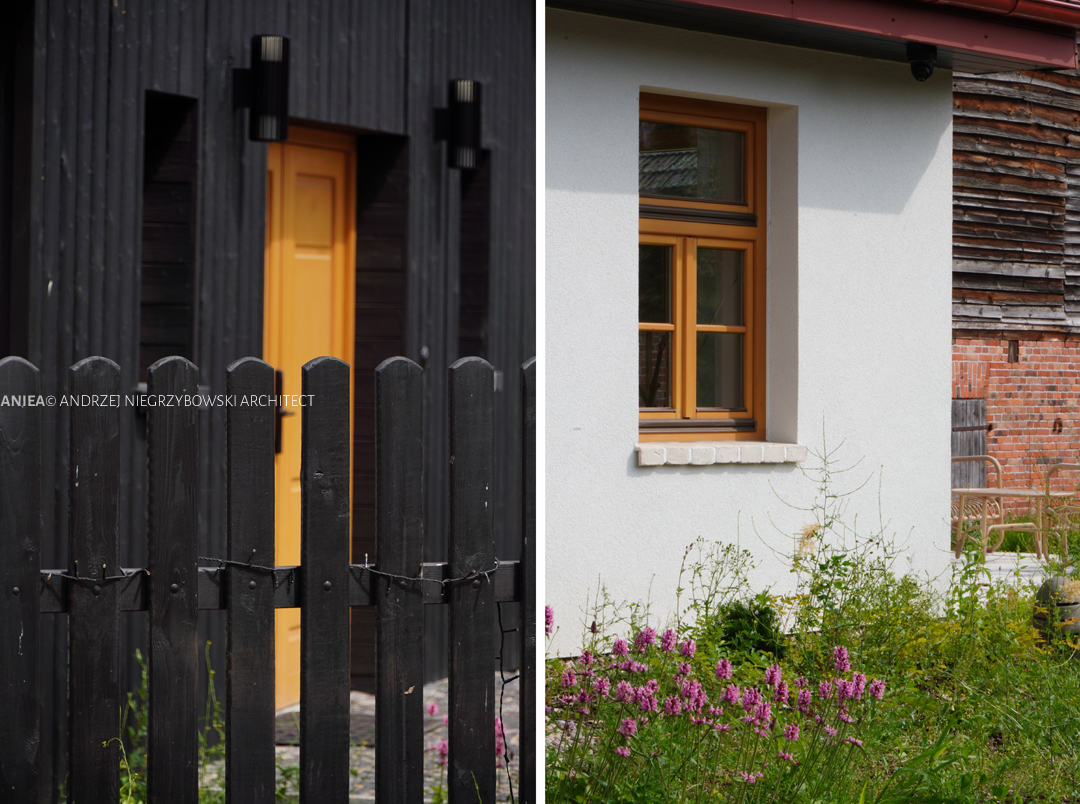
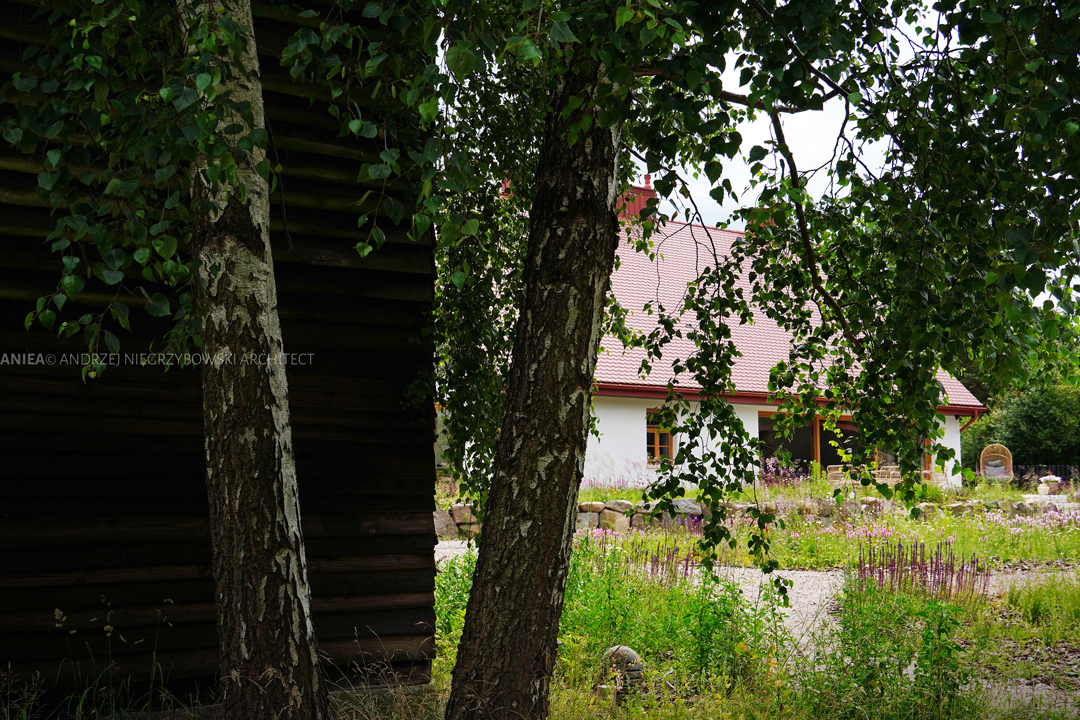
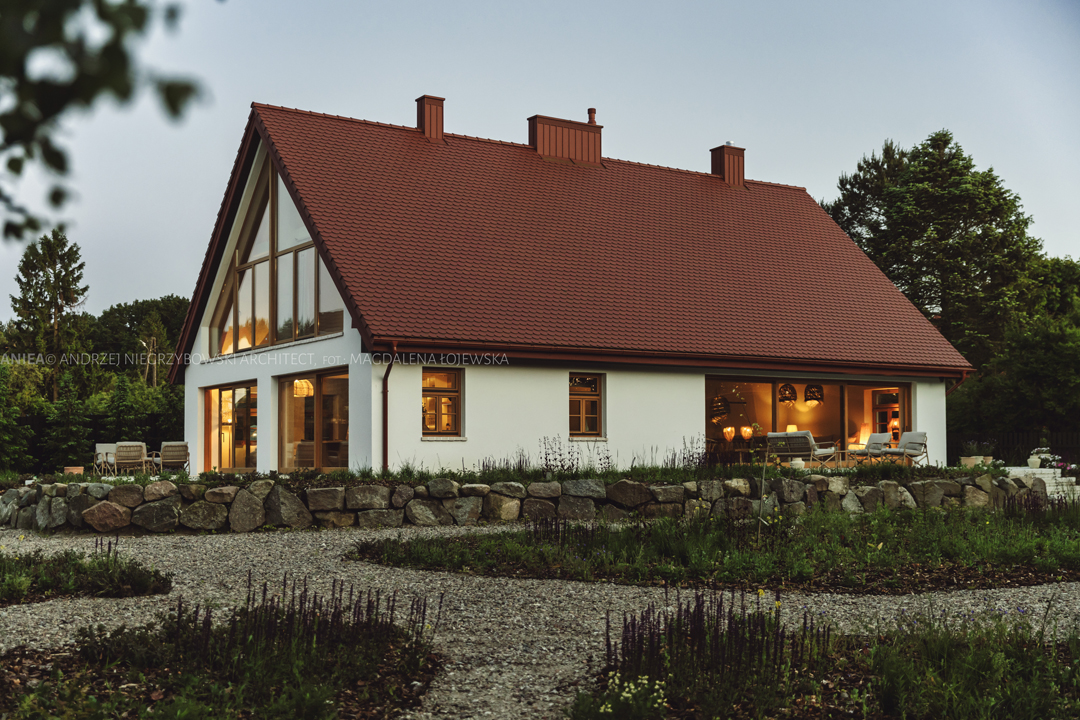
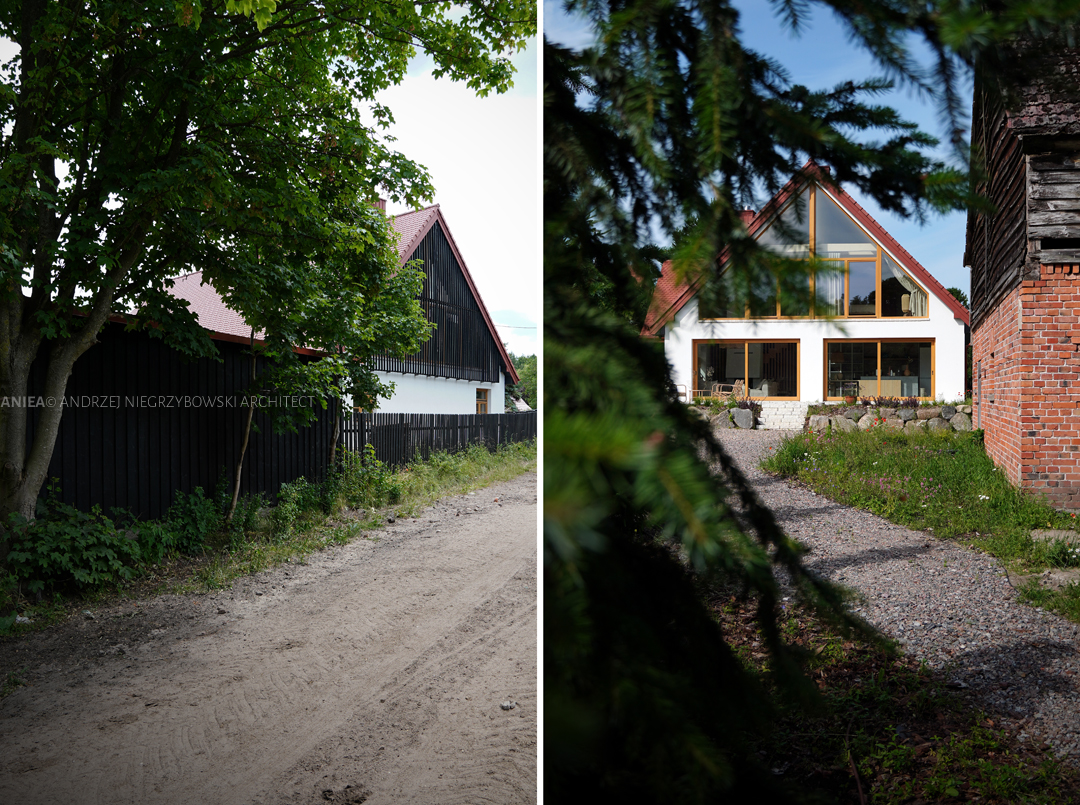
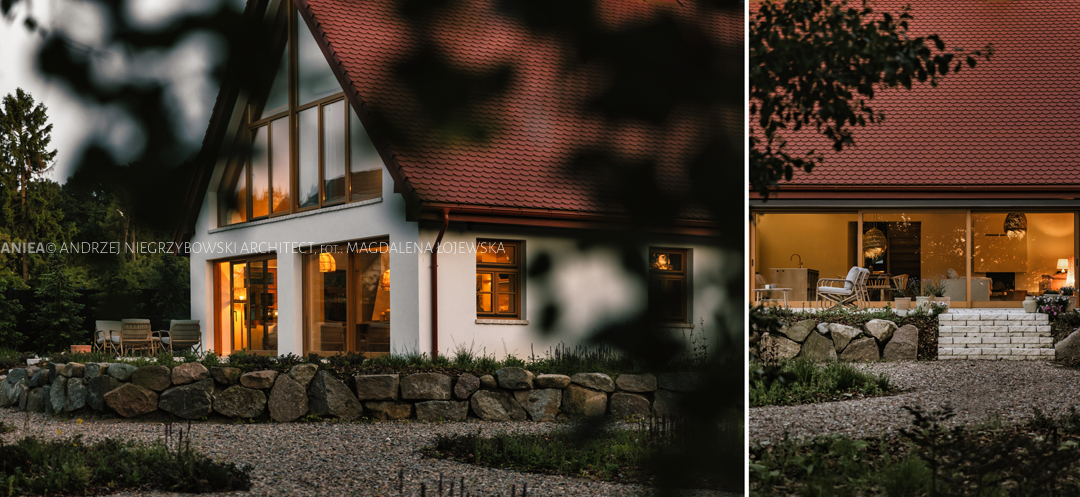
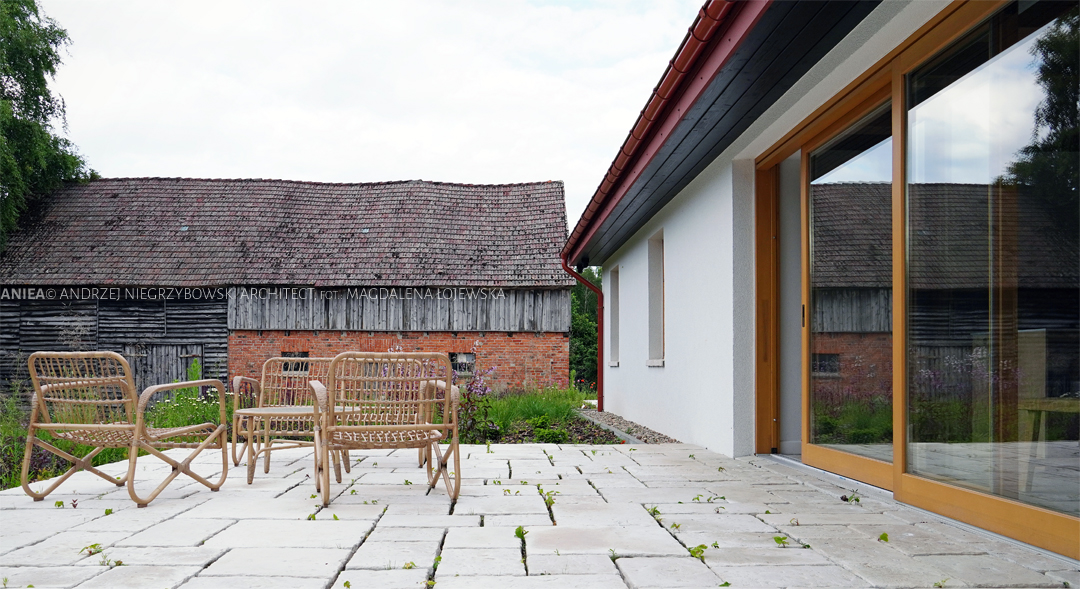
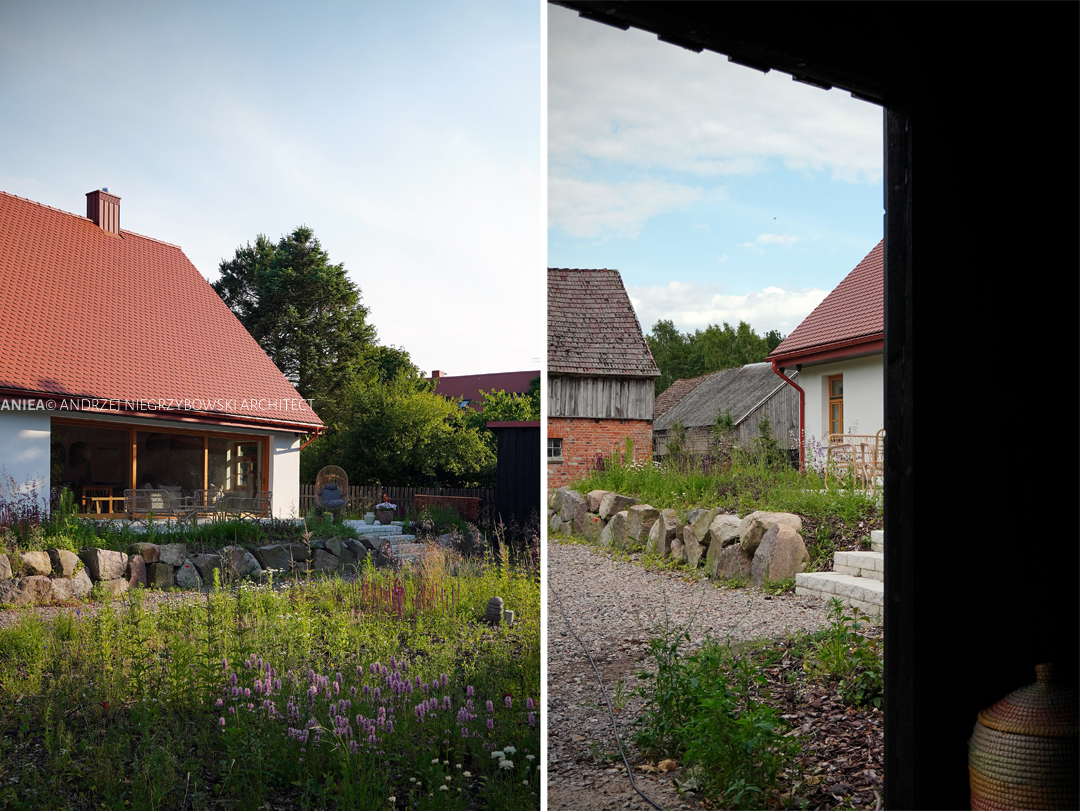
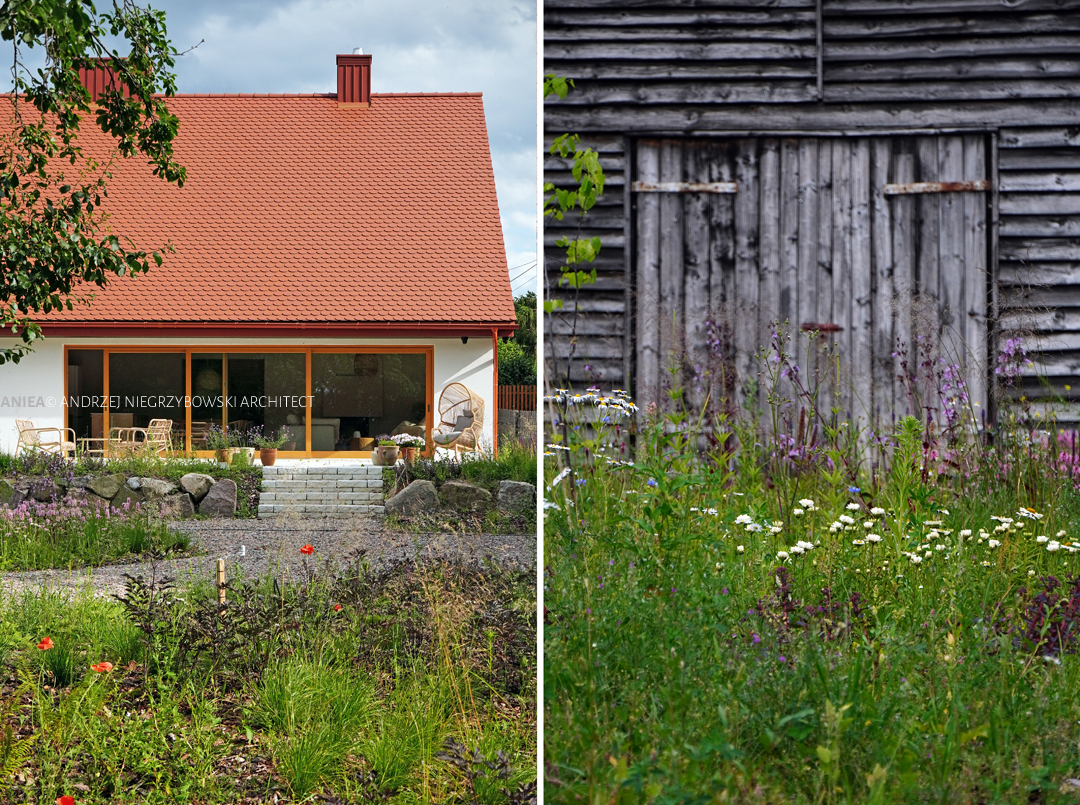
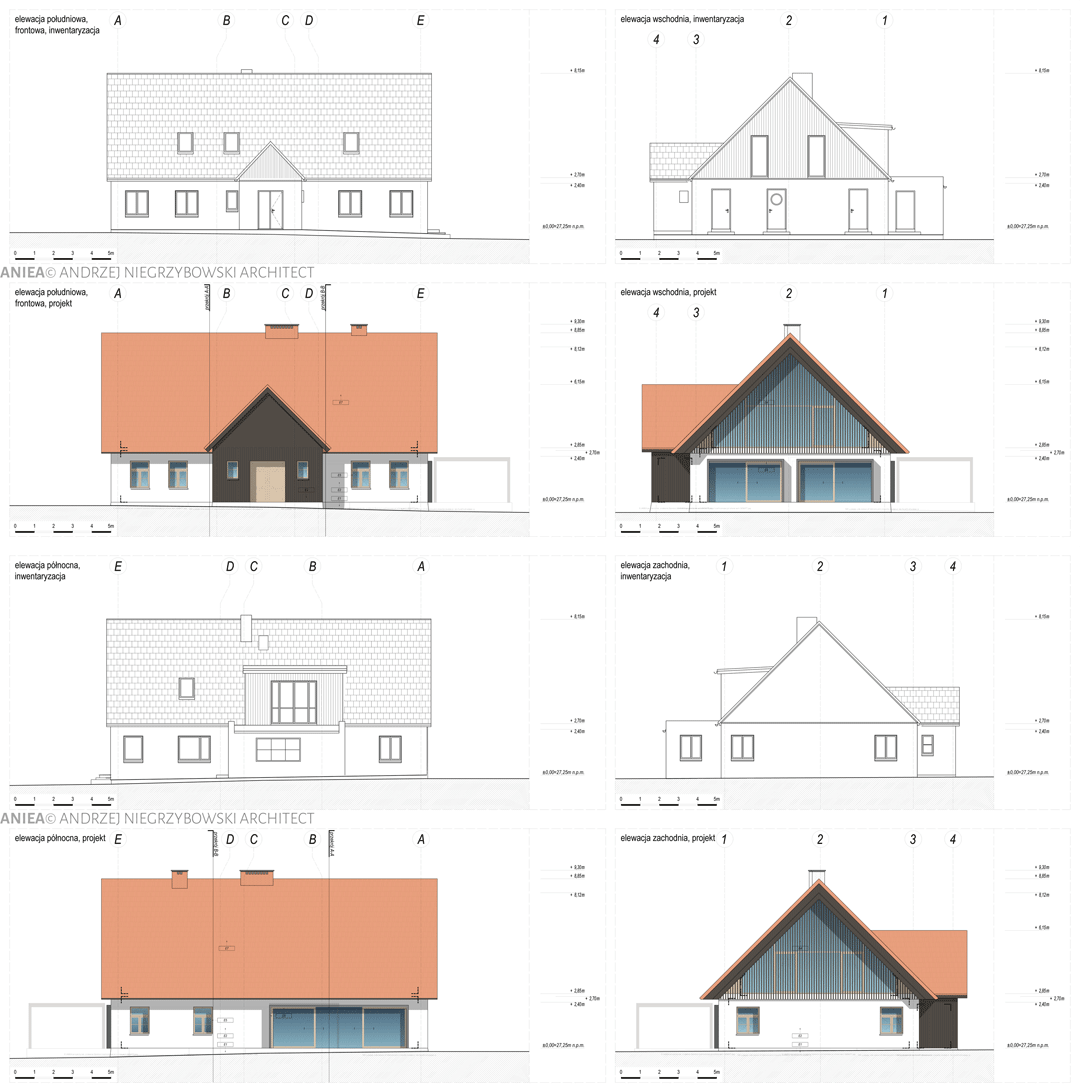
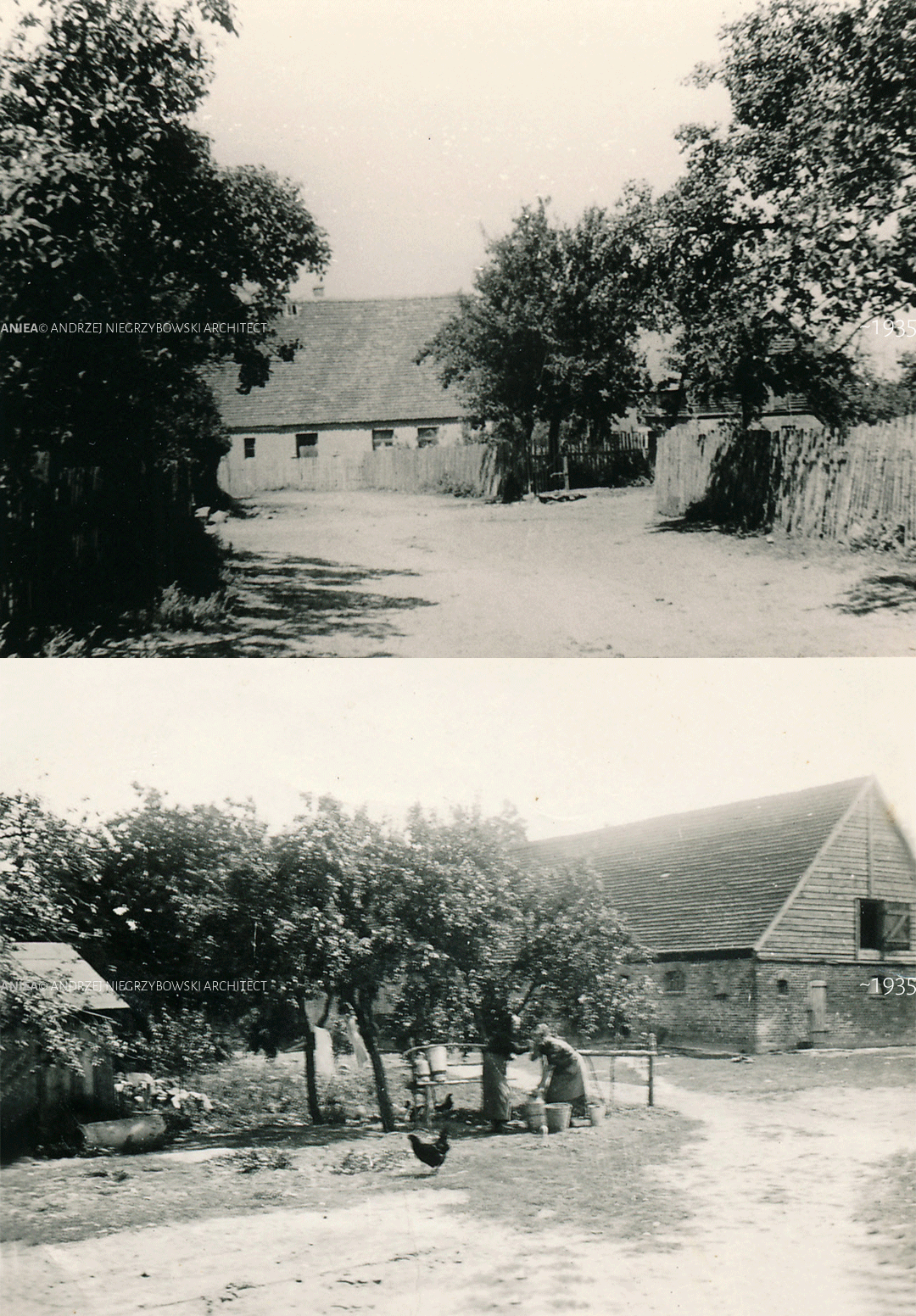
The building volumes have retained their original form and detailing on the street-facing side — their massing and window rhythm reflect the historic character of the place. Contemporary interventions and glazed openings were introduced on the inner courtyard side, the former farmyard. The house façade was restored with a stone plinth and a light, subtly worn plaster finish, while the barn reflects the region’s characteristic combination of wood and brick.
In accordance with the local zoning plan, both volumes were covered with gabled roofs with clay tiles — a material characteristic of northern Kashubia. The roof was stripped of contemporary additions such as skylights or roof windows, restoring its original simplicity and material continuity. Subtle modern glazed inserts — such as the triangular gable of the house — were concealed behind wooden louvers, evoking the traditional gables of rural houses and farm buildings.
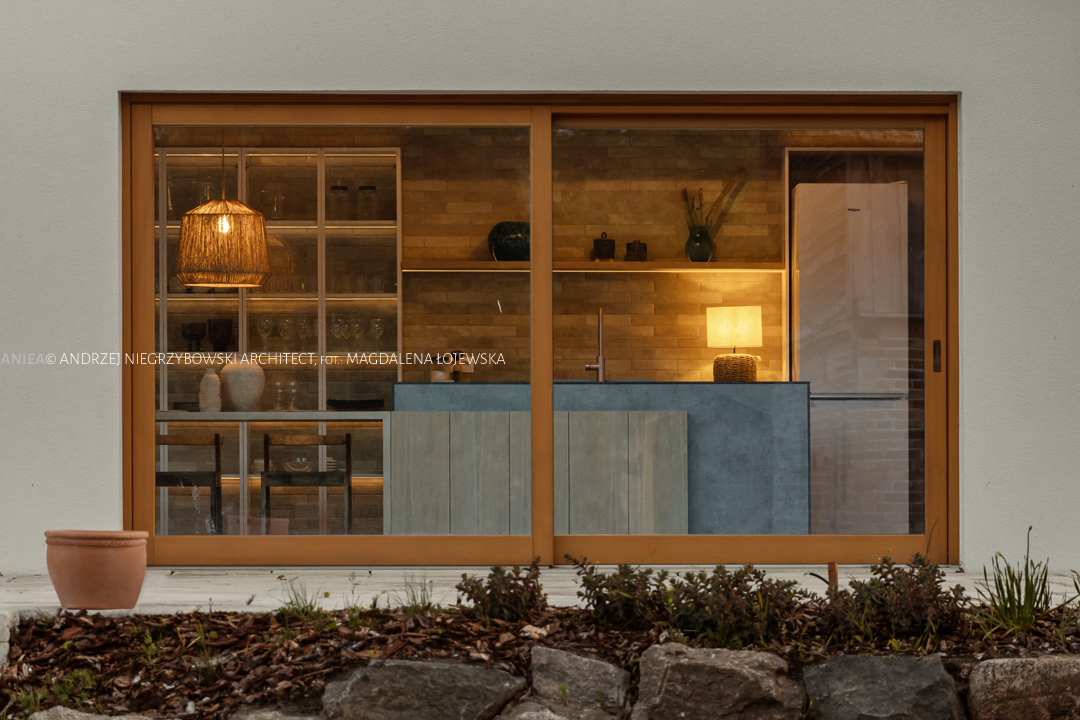
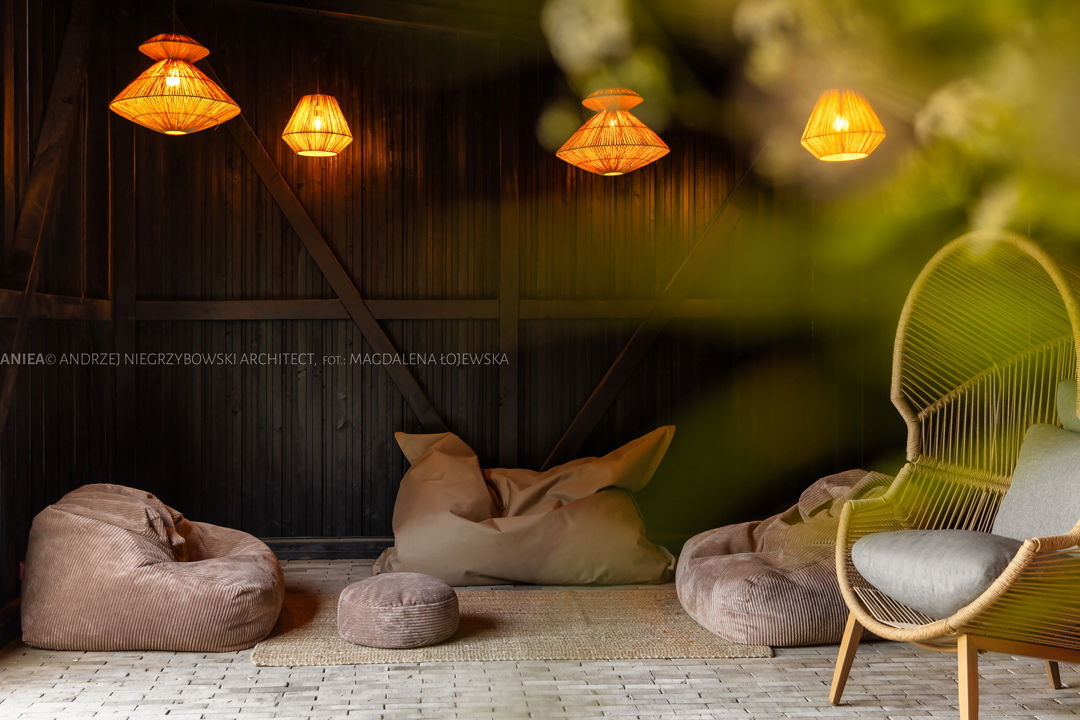
This approach — setting modern elements in the background — allowed the historical details, textures, and forms to take center stage. The same principle was applied to the interiors, dominated by a palette of natural materials: raw wood, clay plaster, light brick, linen, and copper.
The house accommodates two independent, two-level apartments, each opening onto the inner courtyard with large glazed openings. Apartment A comprises a living area with kitchen and dining space, three bedrooms, and two bathrooms. Apartment B offers two bedrooms, two bathrooms, and an open-plan living area. Both interiors are connected by airy wooden staircases, while glazed gables provide visual contact with the surroundings and additional natural light. The combination of historic windows with large contemporary glazing and louvers creates a play of light and shadow, highlighting the material structure.
Despite the presence of modern solutions, the interiors are dominated by a rustic calm. Attention is drawn to individual accents: solid wood cabinets and tables, wicker and rattan accessories — all in the spirit of restrained Kashubian minimalism. The resulting spaces combine the comfort of a contemporary home with the authenticity of rural heritage.
This project embodies a dialogue between the spirit of place and modern sensibility — where introverted minimalism is less a style than a way of listening to context. The reconstructed farmstead demonstrates that contemporary architecture can speak softly — quietly, locally, yet fully aware of form, light, and meaning.
Design: 2021
Status: completed 2025
Total area: approx. 210 m² (house) + 250 m² (barn)
Location: Northern Kashubia, Dymnica, Poland
Architectural design: Andrzej Niegrzybowski
Landscape design: Marta Góra
Photography: Magdalena Łojewska, Andrzej Niegrzybowski.
Interior design to be found HERE.